

Mining, Labour, Waste Batteries, and the Sustainability Gaps We Rarely Discuss
By Canon Otto
Convener, Global Sustainability Summit, Founder, CleanCyclers
Contributor, SustainabilityUnscripted
Electric vehicles are often presented as the moral endpoint of climate responsibility.
Drive electric.
Cut emissions.
Save the planet.
The narrative is simple, compelling—and dangerously incomplete.
As the global transition accelerates, it is time to confront a more uncomfortable truth: electric vehicles are not inherently sustainable. They are cleaner at the tailpipe, yes—but sustainability does not end where emissions accounting becomes convenient.
At CleanCyclers, sustainability is measured by systems, not slogans. And when electric vehicles are examined across their full lifecycle, serious gaps emerge—gaps we can no longer afford to ignore.
Mining the Future: The Hidden Cost of Clean Transport

Every electric vehicle begins long before the factory floor.
Lithium.
Cobalt.
Nickel.
Rare earth metals.
These materials are extracted through mining processes that are often environmentally destructive and socially exploitative. In regions across Africa, South America, and parts of Asia, mineral extraction has been linked to deforestation, water contamination, land displacement, and unsafe labour conditions.
The irony is stark:
clean mobility is being built on dirty extraction.
At the Global Sustainability Summit, one recurring question dominates EV discussions: Can we call a technology sustainable if its supply chain externalises harm to already vulnerable communities?
If sustainability simply shifts environmental and social costs from cities in the Global North to mining regions in the Global South, then the transition is not just flawed—it is unjust.
Labour, Inequality, and the EV Supply Chain
The electric vehicle conversation often celebrates innovation while remaining silent on labour.
Informal miners.
Precarious factory workers.
Communities excluded from decision-making.
These human realities are rarely included in EV success stories. Yet sustainability without labour justice is not sustainability—it is outsourced responsibility.
Through the editorial lens of SustainabilityUnscripted, this pattern is becoming increasingly clear: many climate solutions succeed technologically while failing ethically.
A truly sustainable EV transition must ask:
- Who bears the risk?
- Who captures the value?
- Who is protected—and who is invisible?
Until these questions are addressed, electric vehicles remain a partial solution wrapped in a full narrative.
The Battery Problem We Are Not Ready For

Perhaps the most overlooked issue in the EV transition is what happens after the vehicle’s useful life.
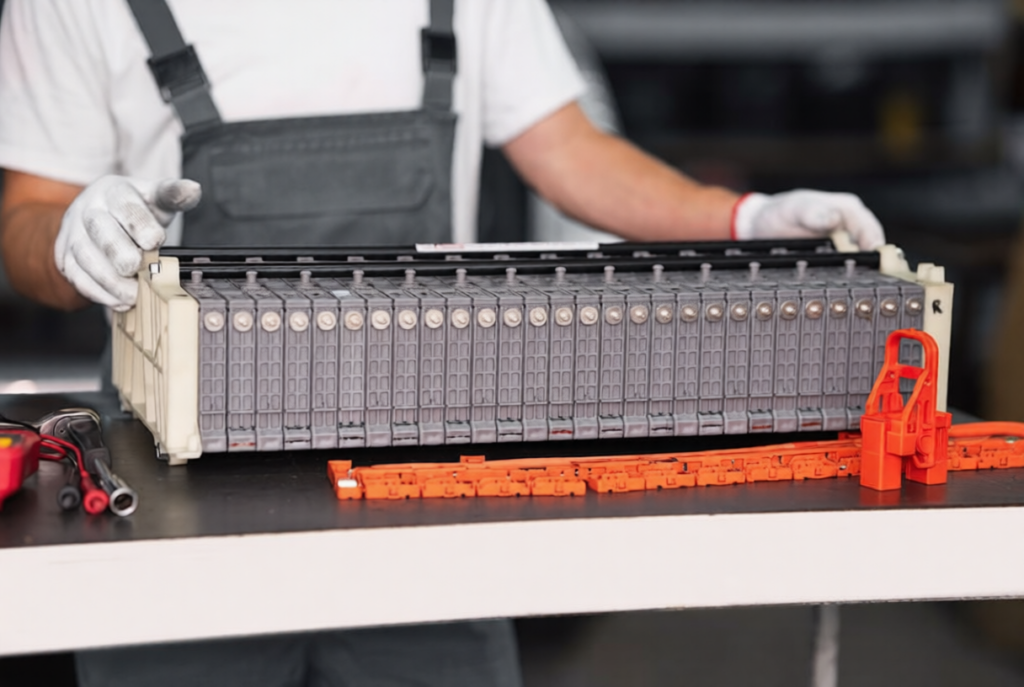
Lithium-ion batteries are complex, hazardous, and difficult to recycle. As EV adoption grows, the world is heading toward a massive wave of end-of-life batteries—many containing toxic materials that can contaminate soil and water if mismanaged.
This is not a future problem.
It is a rapidly approaching one.
At CleanCyclers, waste is never an afterthought. It is the system’s truth test. A technology cannot be called sustainable if its waste stream overwhelms existing infrastructure—or worse, is exported to countries least equipped to manage it.
Without serious investment in battery reuse, recovery, and circular infrastructure, today’s climate solution risks becoming tomorrow’s toxic legacy.
Emissions Accounting vs Systems Reality

Electric vehicles are often evaluated through a narrow metric: tailpipe emissions.
But sustainability does not operate in silos.
When energy grids rely on fossil fuels, EVs shift emissions from the road to the power plant. When batteries are produced using carbon-intensive processes, lifecycle emissions rise sharply. When vehicles are designed for short lifespans and rapid replacement, material demand accelerates.
In other words: an electric vehicle is only as clean as the system around it.
This systems perspective is central to how CleanCyclers approaches sustainability. Technology alone does not deliver transformation—infrastructure, governance, behaviour, and circularity do.
Creativity Turns Waste into Opportunity—If We Design for It
Despite these challenges, this is not an argument against electric vehicles.
It is an argument against uncritical adoption.
The EV transition can succeed—but only if creativity is applied beyond marketing and into system design:
- Designing batteries for reuse and modular replacement
- Building local recycling and recovery ecosystems
- Integrating informal waste workers into formal value chains
- Linking EV growth to renewable energy expansion
- Holding manufacturers accountable for end-of-life responsibility
This is where creativity turns waste into opportunity—not as rhetoric, but as infrastructure.
At CleanCyclers, circular economy principles are applied where they matter most: at the intersection of waste, livelihoods, and environmental protection.
Rethinking What “Clean” Really Means
The danger of the electric vehicle narrative is not that it is wrong—but that it is incomplete.
When sustainability conversations avoid complexity, they produce fragile solutions. The EV transition must be honest enough to confront its own contradictions.
As discussed at the Global Sustainability Summit, the next phase of climate leadership will belong to those willing to say:
Clean is not just what we see.
It is what we account for.
It is what we are willing to fix.
A Final Reflection
Electric vehicles are part of the climate solution—but they are not the solution.
Without ethical mining, fair labour, circular battery systems, and waste accountability, EVs risk becoming another chapter in the long history of technologies that solved one problem while deepening others.
Through CanonOtto, CleanCyclers, and SustainabilityUnscripted, the position remains consistent:
There is no such thing as clean technology in a dirty system.
The work ahead is not just to electrify transport—but to redesign the system that supports it.