

By Amb. Canon Otto
Waste is often discussed as a logistical problem.
How do we collect it?
How do we sort it?
How do we recycle it?
These are important questions. But at CleanCyclers, we have learned that before waste becomes a systems issue, it is first a human behavior issue.
People do not simply throw things away because waste exists.
They throw things away because of habits, emotions, convenience, perception, and deeply conditioned patterns of behavior.
Through SustainabilityUnscripted, we continue to explore a critical truth:
If we want to solve waste, we must first understand the psychology behind it.
Waste Is a Behavioral Outcome

Every item discarded represents a decision.
A decision influenced by:
- Convenience
- Perceived value
- Emotional attachment (or lack of it)
- Time pressure
- Social norms
Waste does not begin in the landfill.
It begins in the mind.
“Before waste enters the bin, it passes through a psychological filter.” — CanonOtto
This is why technical solutions alone are often insufficient.
A recycling system may exist, but if people do not feel motivated to participate, the system underperforms.
A waste bin may be available, but if convenience overrides responsibility, littering continues.
At CleanCyclers, this is a lesson we see repeatedly.
Why People Throw Things Away
Human beings are not always rational consumers.
Our decisions are often shaped by invisible psychological triggers.
1. Convenience Bias
People naturally prefer the easiest available option.
Throwing something away is often faster than:
- Sorting it
- Reusing it
- Repairing it
- Finding an alternative use
This makes disposal psychologically attractive.
Modern systems have reinforced this by designing environments for speed and disposability.
Through SustainabilityUnscripted, we emphasize that convenience culture has normalized wasteful behavior.
2. Low Perceived Value
People throw away what they no longer perceive as useful.
This is not always because the item lacks value—but because the individual no longer sees its relevance.
For example:
- Leftover food is discarded despite still being edible
- Clothing is replaced despite remaining functional
- Packaging is treated as instant waste without considering reuse potential
At CleanCyclers, we often say:
Waste is frequently a perception failure before it becomes a disposal problem.
“What we call waste is often simply value we have stopped recognizing.” — CanonOtto
3. Psychological Distance
People tend to disconnect from consequences they cannot immediately see.
Once an item leaves their hands:
- It feels “gone”
- Responsibility feels transferred
- Consequences feel distant
This is why people may dispose carelessly without fully processing downstream impact.
Landfills are out of sight. Pollution feels abstract. Environmental degradation seems delayed.
This psychological distance weakens accountability.
4. Emotional Consumption and Decluttering
Interestingly, people also throw things away as a form of emotional reset.
Discarding items can create feelings of:
- Relief
- Control
- Cleanliness
- Freshness
This explains why decluttering trends can sometimes unintentionally promote disposal without encouraging circular alternatives like donation, repair, or repurposing.
The issue is not the desire for order.
The issue is when disposal becomes the default solution.
5. Social Normalization
Behavior is influenced heavily by what people observe around them.
If wasteful behavior is normalized:
- Littering feels acceptable
- Overconsumption feels ordinary
- Disposable culture feels natural
But the reverse is also true.
When responsible behavior is visible and normalized, people begin to adapt.
This is why community culture matters so deeply.
At CleanCyclers, we recognize waste behavior as both personal and social.
Why Awareness Alone Is Not Enough
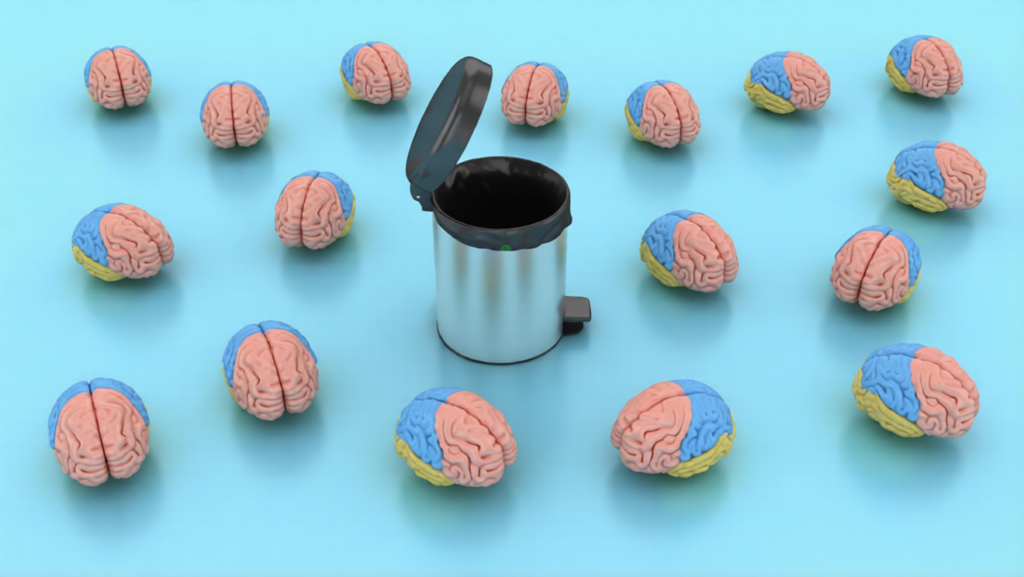
Many people understand environmental issues intellectually.
They know:
- Plastic pollution is harmful
- Recycling matters
- Waste reduction is beneficial
Yet knowledge alone rarely changes behavior.
Why?
Because behavior is not driven by logic alone.
It is driven by:
- Habit loops
- Environmental cues
- Reward systems
- Friction levels
This is why sustainability interventions must go beyond information.
Through SustainabilityUnscripted, we continue to advocate for behavioral design—not just awareness campaigns.
Designing for Better Waste Behavior
If waste behavior is psychological, solutions must also be psychological.
This means making sustainable behavior:
- Easier
- More visible
- More rewarding
- More socially reinforced
Practical examples include:
- Clearly labeled waste separation systems
- Convenient recycling access
- Reuse incentives
- Public recognition for responsible behavior
- Community accountability systems
At CleanCyclers, we understand that systems work best when they align with how people actually behave—not how we assume they should behave.
“Sustainability succeeds when responsibility becomes easier than negligence.” — CanonOtto
The Role of Mindset in Waste Reduction
Ultimately, reducing waste requires more than infrastructure.
It requires reframing.
People must begin to ask:
- Do I really need this?
- Can this be reused?
- Can this be repaired?
- What happens after I discard it?
These small mental shifts create behavioral change.
And behavioral change creates system improvement.
From Waste Psychology to Circular Thinking

Circular economies are not built only on technology.
They are built on new ways of thinking.
A circular mindset asks us to see materials not as temporary conveniences, but as assets moving through lifecycles.
This is a core philosophy at CleanCyclers.
We are not only managing waste.
We are helping reshape how people think about value, responsibility, and resource flow.
A Final Reflection
The question is not simply:
Why do people throw things away?
The deeper question is:
What beliefs, habits, and assumptions make throwing things away feel normal?
Because if we can answer that question, we can begin to redesign behavior itself.
And once behavior changes, systems follow.
The future of sustainability will not be built only by better waste systems.
It will be built by better human decisions.
At CleanCyclers, through SustainabilityUnscripted, this is the conversation we believe must continue.
Because waste is never just material.
It is behavior made visible.