

By Amb. Canon Otto
For decades, society has measured progress through a familiar lens.
More production.
More consumption.
More construction.
More extraction.
More economic expansion.
These indicators have long been celebrated as signs of development.
But in today’s world, we must ask a more urgent question:
Progress for whom—and at what cost?
At CleanCyclers, we believe the time has come to challenge outdated definitions of growth and success.
Through SustainabilityUnscripted, we continue to advocate for a more intelligent framework—one where progress is not defined solely by how much we produce, but by how responsibly we sustain what we create.
Because in a resource-constrained world, endless growth without accountability is not progress.
It is acceleration without direction.
The Old Definition of Progress
Traditional models of development often reward scale over sustainability.
They celebrate:
- Increased industrial output
- Rising consumption levels
- Infrastructure expansion without lifecycle accountability
- Disposable convenience systems
On paper, these can appear as growth.
But beneath the surface, they often create:
- Resource depletion
- Waste accumulation
- Environmental degradation
- Social inequality tied to environmental burdens
“A system cannot call itself progressive if its growth creates long-term instability.” — Canon Otto
This is the contradiction of modern development.
We have become highly efficient at expansion—but often disconnected from consequence.
Why Progress Must Be Redefined
True progress should improve quality of life without compromising the systems that support life itself.
That means development must now account for:
- Environmental resilience
- Resource efficiency
- Waste reduction
- Circular economic systems
- Long-term social and ecological well-being
At CleanCyclers, we see sustainability not as an obstacle to progress, but as its evolution.
The future cannot be built on models that treat finite resources as infinite.
The Problem with Linear Thinking
Much of today’s economy still follows a linear model:
Take → Make → Dispose
Resources are extracted.
Products are manufactured.
Items are consumed briefly.
Waste is discarded.
This model may generate short-term economic movement, but it produces long-term inefficiency.
Landfills expand.
Materials are lost.
Environmental systems absorb the burden.
Through SustainabilityUnscripted, we repeatedly highlight this reality:
Waste is often evidence of poor system design, not inevitable consequence.
Progress in a Sustainable World Looks Different
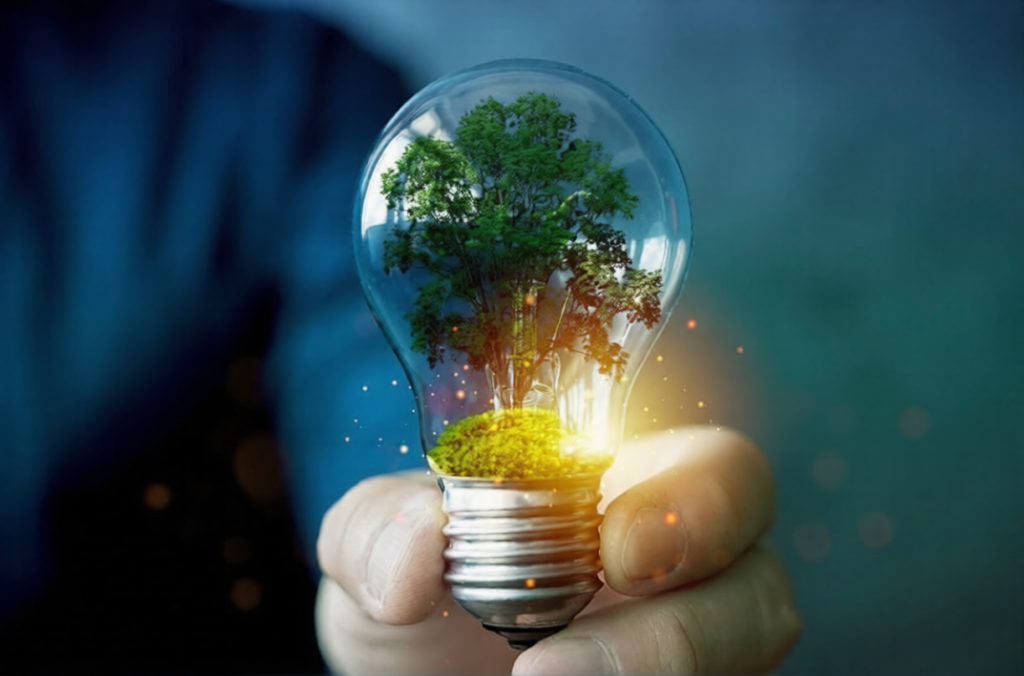
A sustainable definition of progress asks different questions.
Not:
- How much did we produce?
But:
- How efficiently did we use resources?
- How much waste did we prevent?
- How durable were the systems we built?
- How inclusive and resilient is the growth being created?
This changes everything.
A city is not progressive simply because it is expanding.
It is progressive if that expansion is:
- Resource-conscious
- Waste-efficient
- Socially resilient
- Environmentally regenerative
“Growth without sustainability is expansion without intelligence.” — CanonOtto
Measuring What Actually Matters
If progress is to be redefined, measurement systems must evolve too.
Success can no longer be evaluated solely through financial or production indicators.
We must also consider:
- Waste diversion rates
- Circular economy adoption
- Resource recovery systems
- Community environmental participation
- Long-term infrastructure resilience
At CleanCyclers, this is central to how we think.
Managing waste is important.
But preventing waste through smarter systems is even more powerful.
Innovation Must Shift from Quantity to Quality
Innovation is often misunderstood as constant novelty.
But sustainable innovation is not merely about producing more new things.
It is about designing better systems.
This includes:
- Products built to last
- Materials designed for recovery
- Packaging optimized for reuse or recycling
- Urban systems that reduce inefficiency
Through SustainabilityUnscripted, we emphasize that innovation must now be evaluated by impact—not novelty alone.
The Circular Economy as a New Progress Model
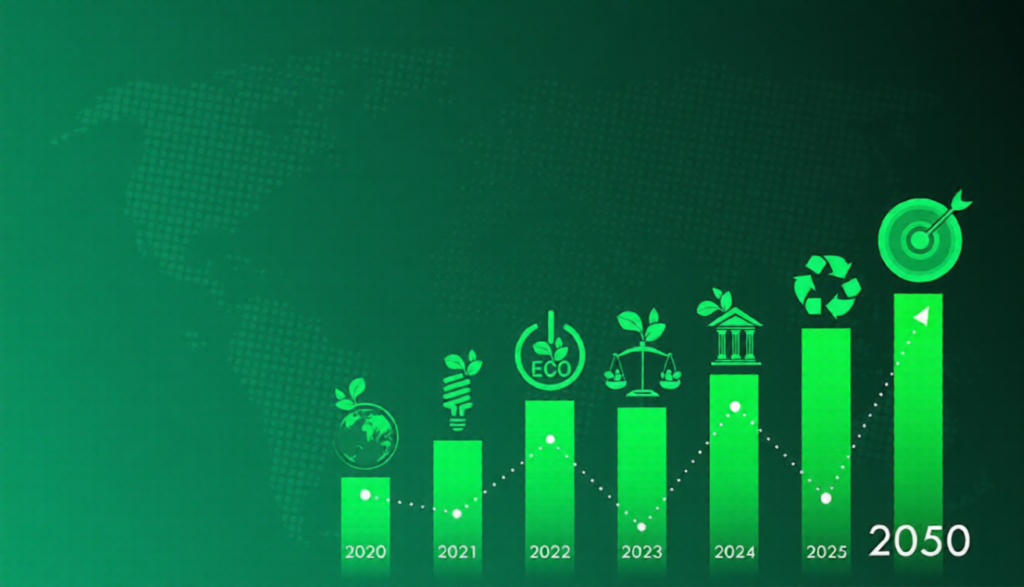
The circular economy offers a practical framework for redefining progress.
Instead of disposal, it prioritizes:
- Reuse
- Repair
- Recovery
- Regeneration
- Resource circulation
In this model:
Waste becomes input.
Materials retain value.
Systems become more intelligent.
This is the kind of future CleanCyclers is helping build.
Not a future where waste is simply managed better.
But one where waste is systematically reduced through smarter design.
Cultural Change Is Essential
Redefining progress is not only an economic challenge.
It is a cultural one.
Society must begin questioning assumptions such as:
- More consumption equals higher status
- Convenience always equals advancement
- Faster systems are inherently better
These assumptions no longer serve long-term sustainability.
At CleanCyclers, we believe a mature society is not defined by how quickly it consumes—but by how responsibly it operates.
From Growth to Stewardship
Perhaps the most important shift is philosophical.
We must move from a mindset of extraction to one of stewardship.
This means asking:
- What systems are we leaving behind?
- What environmental costs are hidden within current growth?
- Are we building wealth while eroding long-term resilience?
Through SustainabilityUnscripted, we continue to explore these questions because they are no longer optional.
They are foundational.
The CleanCyclers Perspective
At CleanCyclers, our mission is aligned with this new definition of progress.
We are advancing systems that prioritize:
- Circular thinking
- Waste reduction
- Resource efficiency
- Sustainable community practices
Because progress in the 21st century must mean more than expansion.
It must mean responsible advancement.
A Final Reflection
The future will not reward societies that simply grow faster.
It will reward those that grow wiser.
The question is no longer whether we can build more.
The question is:
Can we build systems that endure?
Can we create prosperity without multiplying waste?
Can we expand without exhausting the systems we depend on?
Can progress become intelligent, not merely accelerated?
At CleanCyclers, through SustainabilityUnscripted, this is the future we believe in.
A future where progress is not measured by what we extract and discard—
but by what we preserve, optimize, and sustain.
Because real progress is not just moving forward.
It is ensuring the future remains worth moving into