

By Amb. Canon Otto, Convener, Global Sustainability Summit & Founder, Cleancyclers
We are living at the intersection of two defining forces of our time:
the climate crisis and the digital revolution.
For years, technology and sustainability were treated as parallel conversations. Today, they are inseparable. As climate impacts intensify — from flooding and heatwaves to food insecurity and waste mismanagement — the question is no longer whether technology can help, but how intentionally we deploy it.
At Cleancyclers, and through global conversations convened at the Global Sustainability Summit, one message is clear:
Artificial Intelligence (AI) is no longer optional in climate resilience — it is essential.
Understanding Climate Resilience in the Digital Age

Climate resilience is not simply about reducing emissions. It is about the capacity of communities, systems, and economies to anticipate, absorb, adapt, and recover from climate shocks.
AI strengthens this capacity by turning data into foresight.
Across energy, agriculture, waste management, disaster preparedness, and urban planning, AI enables us to move from reaction to prevention — a shift Africa and the Global South urgently need.
At SustainabilityUnscripted, we consistently explore how innovation becomes truly powerful when aligned with human and environmental priorities. AI, when ethically applied, embodies that alignment.
AI and Early Climate Risk Detection

One of AI’s most powerful contributions to sustainability is predictive intelligence.
AI systems can analyze vast datasets — weather patterns, satellite imagery, soil moisture, ocean temperatures — to predict:
- Flood risks
- Drought cycles
- Heat stress
- Disease outbreaks linked to climate change
For vulnerable communities, early warnings mean lives saved, crops protected, and infrastructure preserved.
At the Global Sustainability Summit, I often emphasize that data-driven foresight is a form of climate justice. It gives communities time — and time is resilience.
AI in Waste Management & the Circular Economy: The Cleancyclers Perspective
At Cleancyclers, we view AI as a catalyst for circularity.
Waste management systems across many regions are inefficient, informal, and under-resourced. AI changes that by enabling:
- Smart waste sorting and material identification
- Optimized collection routes that reduce fuel use
- Predictive maintenance for recycling facilities
- Data tracking for end-of-life products, including solar components
This is particularly critical as renewable energy infrastructure expands. Without intelligent systems, today’s clean technologies risk becoming tomorrow’s waste crisis.
AI allows Cleancyclers to design future-ready circular systems, ensuring sustainability does not stop at installation — but continues through the full lifecycle.
AI Supporting Clean Energy and Grid Resilience
AI also plays a vital role in strengthening clean energy systems.
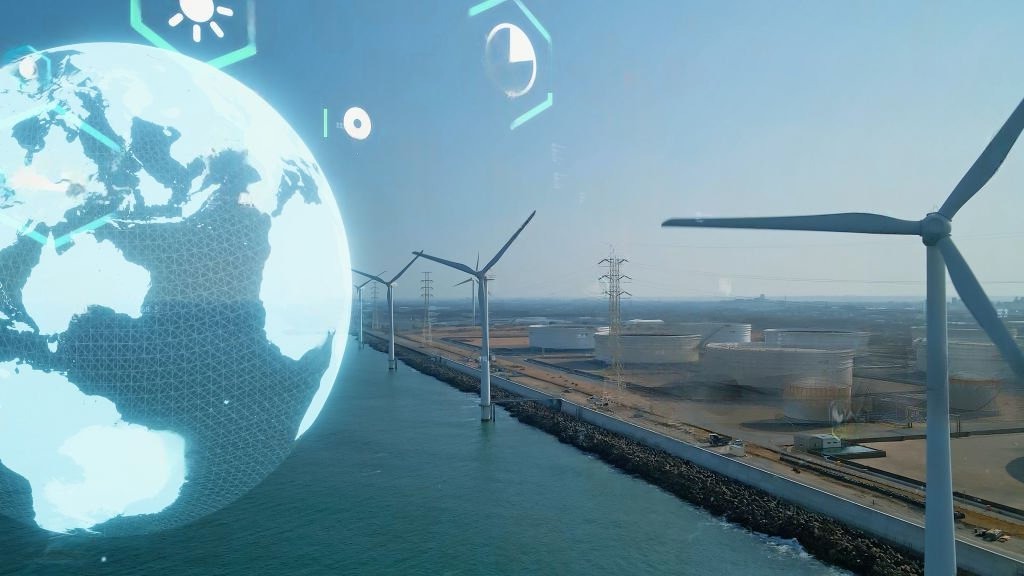
From forecasting renewable energy generation to balancing smart grids and managing energy storage, AI improves reliability and efficiency — especially in regions where power infrastructure is fragile.
For Africa’s clean energy transition to succeed, it must be resilient, decentralized, and intelligent. AI helps achieve this by:
- Reducing energy losses
- Anticipating grid failures
- Supporting off-grid and mini-grid systems
This convergence of technology and sustainability is central to the future we advocate through Cleancyclers and SustainabilityUnscripted.
Ethics, Equity, and the CanonOtto View
While AI offers immense promise, it also raises serious questions.
Who owns the data?
Who benefits from the technology?
Who is left behind?
As CanonOtto, I am firm in this position:
AI must serve people and planet — not profit alone.
Climate technologies must be inclusive, transparent, and accessible. If AI deepens inequality or excludes frontline communities, it undermines the very resilience it claims to build.
This is why ethical AI governance remains a core conversation at the Global Sustainability Summit — alongside innovation and investment.
Bridging Technology and Human-Centred Sustainability
AI is not a silver bullet. It cannot replace strong governance, community engagement, or responsible leadership. But when combined with human insight and local knowledge, it becomes transformative.
True climate resilience lies at the intersection of:
- Technology
- Policy
- Community participation
- Circular economy principles
This integrated approach defines the work of Cleancyclers and the editorial mission of SustainabilityUnscripted — sustainability that is practical, inclusive, and future-focused.
The Road Ahead: Innovate With Purpose

The climate crisis demands urgency — but also wisdom.
As we embrace AI and advanced technologies, we must do so with clarity of purpose: to protect lives, strengthen ecosystems, and build systems that endure.
Africa has the opportunity to leapfrog outdated models and design climate-resilient systems powered by intelligent technology and ethical leadership.
At Cleancyclers, we are committed to ensuring that innovation supports circularity, resilience, and environmental responsibility. Through SustainabilityUnscripted, we will continue to unpack these conversations honestly. And through the Global Sustainability Summit, we will keep convening the minds shaping this future.
Because when technology meets sustainability — guided by purpose — resilience becomes possible.