


By Amb. Canon Otto
In the sustainability sector, we often rely on facts.
We present statistics.
We discuss climate targets.
We publish reports.
We share scientific findings.
All of these are important.
But there is a question we must ask:
If information alone changed behavior, why do many environmental challenges still persist despite decades of awareness campaigns?
At CleanCyclers, we have learned that people do not always act because they know more.
They act because they connect.
And one of the most powerful ways to create that connection is through storytelling.
Through SustainabilityUnscripted, we continue to champion a simple but transformative idea:
Stories do not merely communicate information—they inspire action.
Why Facts Alone Are Not Enough

Most people understand basic environmental realities.
They know:
- Plastic pollution is harmful.
- Waste management matters.
- Climate change is real.
- Natural resources are finite.
Yet awareness does not always translate into behavior change.
Why?
Because facts speak to the mind.
Stories speak to the heart.
“People may remember statistics for a moment, but they remember stories for a lifetime.” — CanonOtto
This is why storytelling remains one of the most underutilized tools in environmental education.
Stories Make Sustainability Human
Environmental issues can often feel distant.
Terms such as:
- Carbon emissions
- Circular economy
- Resource efficiency
- Climate adaptation
may be technically accurate, but they can feel abstract to everyday people.
Stories bridge this gap.
A story about a family affected by flooding is easier to understand than a chart about climate risk.
A story about a young entrepreneur turning waste into income is more relatable than a report on circular economy opportunities.
A story about a community transforming its environment through collective action creates emotional engagement that data alone cannot achieve.
At CleanCyclers, we have seen firsthand how stories transform sustainability from an abstract concept into a personal reality.
Storytelling Creates Emotional Connection
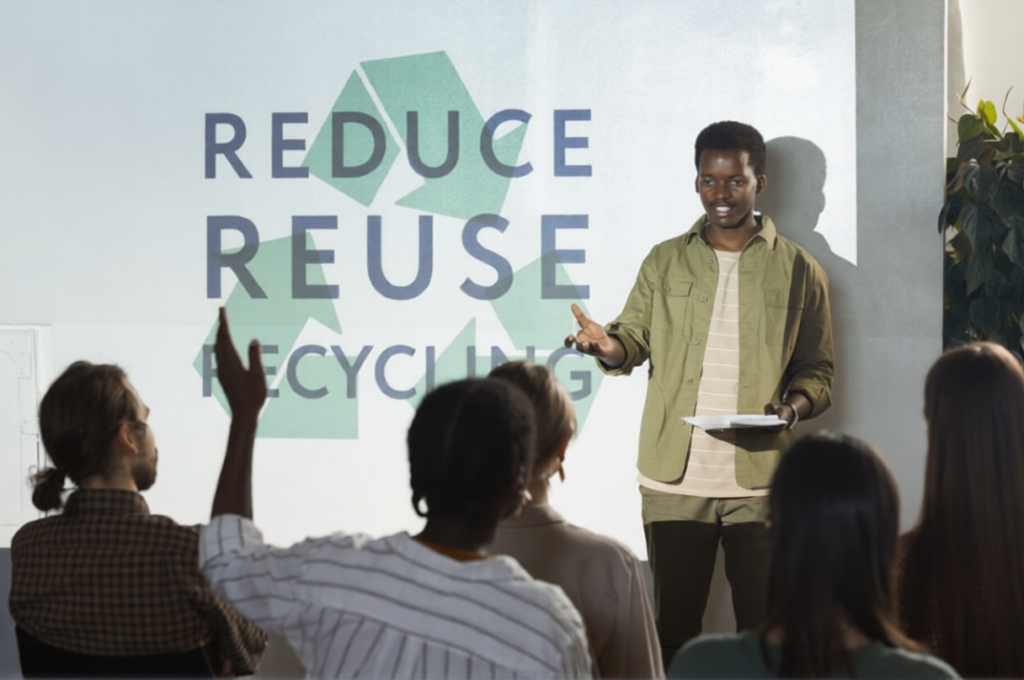
Human beings are emotional decision-makers.
Even when we believe we are acting logically, emotions often influence behavior.
Stories create:
- Empathy
- Inspiration
- Curiosity
- Hope
- Personal relevance
These emotional responses are powerful drivers of action.
Through SustainabilityUnscripted, we consistently use storytelling because sustainability is not simply a technical challenge.
It is a human challenge.
And human challenges require human connection.
Stories Help People See Themselves in the Solution
One of the greatest barriers to environmental action is the belief that individual efforts do not matter.
Many people feel:
- The problem is too large.
- Governments should solve it.
- Corporations are more responsible.
- Individual actions are insignificant.
Stories challenge this mindset.
When people hear about:
- A student leading a recycling initiative
- A market reducing plastic waste
- A community organizing a clean-up campaign
- An entrepreneur creating value from waste
they begin to see possibility.
They begin to think:
“If they can do it, perhaps I can too.”
“Stories transform observers into participants.” — CanonOtto
Storytelling Preserves Environmental Wisdom
In Africa, storytelling has always been a powerful educational tool.
Long before formal environmental education existed, communities passed down values through stories.
Lessons about:
- Respect for nature
- Resource stewardship
- Community responsibility
- Conservation practices
were often embedded in oral traditions.
These stories helped shape behavior across generations.
At CleanCyclers, we believe modern sustainability efforts can learn from this tradition.
Not every lesson needs to be delivered through a report.
Sometimes a story can achieve more than an entire presentation.
Storytelling Makes Sustainability Accessible
One challenge facing environmental education is complexity.
Scientific language can sometimes create barriers.
Stories simplify without oversimplifying.
They make sustainability:
- Relatable
- Memorable
- Accessible
- Inclusive
This is especially important when engaging:
- Young people
- Local communities
- Schools
- Non-technical audiences
Through SustainabilityUnscripted, storytelling allows us to bring sustainability conversations to audiences who may never read technical reports but are deeply affected by environmental issues.
The Digital Age Has Expanded the Power of Stories

Today, storytelling is no longer limited to books or traditional media.
Stories now travel through:
- Social media
- Videos
- Podcasts
- Blogs
- Community platforms
This has created unprecedented opportunities for environmental education.
A single compelling story can inspire thousands of people across continents.
A local sustainability initiative can become a global source of inspiration.
At CleanCyclers, we see digital storytelling as one of the most powerful tools available for accelerating environmental awareness and behavior change.
Storytelling Builds Hope
Environmental communication sometimes focuses heavily on crisis.
While urgency is important, constant exposure to negative narratives can create fatigue.
People may begin to feel overwhelmed or powerless.
Stories offer something different.
They highlight:
- Solutions
- Innovation
- Leadership
- Progress
- Possibility
This does not ignore challenges.
It simply reminds people that change is achievable.
“People are more likely to act when they believe improvement is possible.” — CanonOtto
The Role of Storytelling in the Circular Economy
At CleanCyclers, many of our most impactful sustainability messages are rooted in stories.
Stories of:
- Waste becoming value
- Communities becoming cleaner
- Young people becoming environmental leaders
- Everyday actions creating measurable impact
These stories demonstrate a key principle of the circular economy:
Nothing should be judged solely by its current condition.
Waste can become opportunity.
Challenges can become innovation.
Communities can become examples.
And stories help people see that transformation.
The CleanCyclers Perspective
At CleanCyclers, we believe storytelling is not an accessory to environmental education.
It is a core strategy.
That is why SustainabilityUnscripted exists.
To tell stories that:
- Inspire responsibility
- Promote sustainability culture
- Highlight environmental leadership
- Showcase circular economy opportunities
- Encourage practical action
Because information informs people.
Stories move people.
A Final Reflection
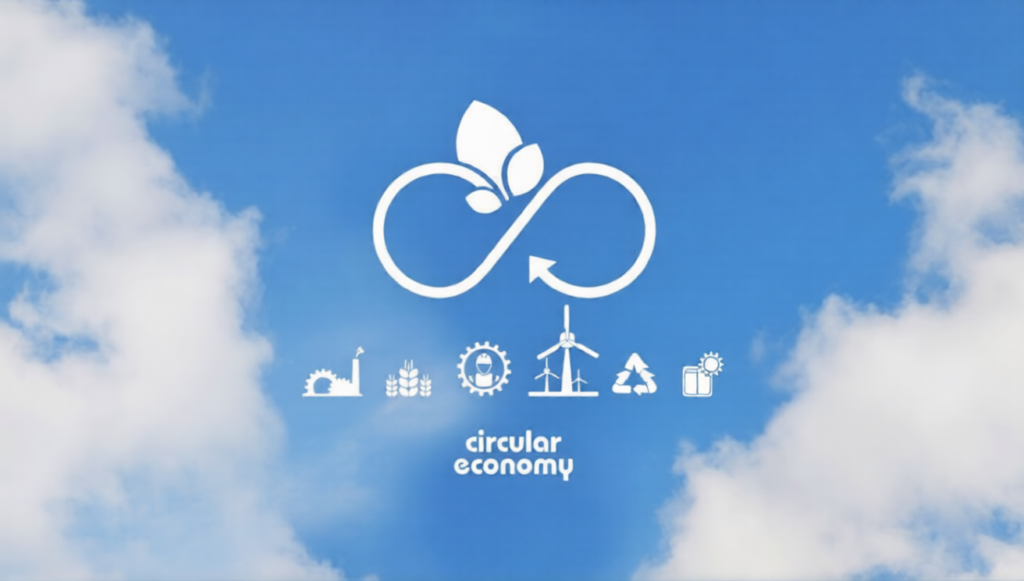
The future of sustainability will depend not only on better technologies, stronger policies, or larger investments.
It will also depend on our ability to communicate in ways that inspire action.
Facts will always matter.
Science will always matter.
Data will always matter.
But if we want people to care, participate, and lead, we must also tell stories.
Stories that connect.
Stories that educate.
Stories that inspire.
Stories that remind people that environmental change is not something happening somewhere else.
It is something they can be part of.
At CleanCyclers, through SustainabilityUnscripted, we believe every sustainable future begins with a story powerful enough to make someone act.
And that may be one of the most important sustainability tools we have.